Jump to content
Jump to footer

Magical apine moments & winter hiking dreams

Experience winter – actively, naturally, authentically.
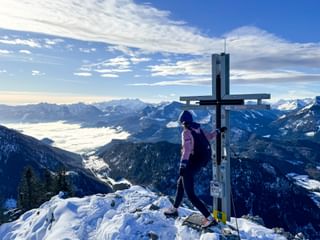
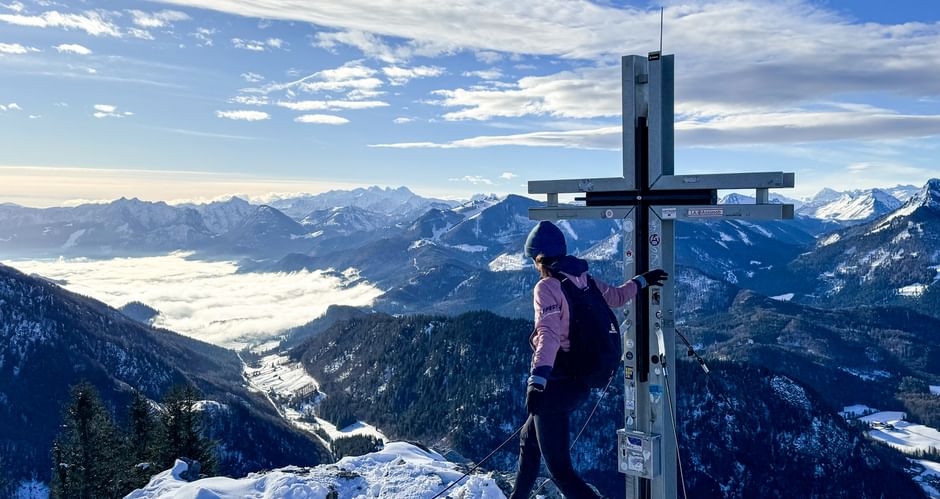
Hiker in purple jacket standing at summit cross on snowy peak, overlooking snow-covered Alpine valleys and mountain ranges under blue sky.

When the first snow makes the peaks glisten and silence descends on the valleys, one of the most magical times of the year begins in the Alps. Winter hiking means slowing down – clear air, sweeping views and paths accompanied only by the crunch of snow.

What do you love most? Hiking in winter when there is little snow, trudging through deep snow with snowshoes, or perhaps a ski tour?

This season, our alpine hiking destinations from Eurohike Walking Holidays reveal a very special side: dreamy, powerful and close to nature. In this article, we present impressions of our hiking regions Salzkammergut and Pinzgau, where winter is not just a backdrop but a real experience. Our product manager Christina was there for you.

The blog also tells you what equipment you need and gives you practical tips for winter hiking. Always keep an eye on the current weather and snow conditions to ensure you return safely. 

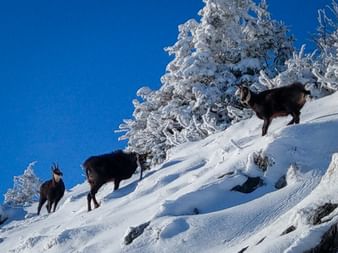
Also: Wild animals seek out sunny spots in winter, so we kindly ask you to be considerate and keep your distance.

Hiker in purple jacket standing at summit cross on snowy peak, overlooking snow-covered Alpine valleys and mountain ranges under blue sky.

Your equipment: The onion look

  • Winter-proof functional clothing such as a rainproof jacket, warm insulated jacket (fleece, down), warm winter hiking trousers, hat, 2 pairs of gloves (for sweating and cold weather), several buffs and/or neoprene face mask, ankle-high waterproof hiking boots with good tread.
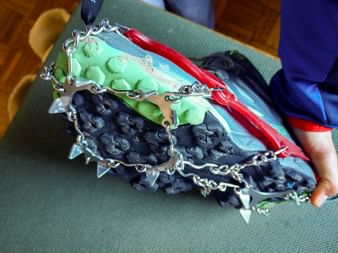
  • If necessary, wear gaiters, and in snow and ice, crampons are recommended. They fit most shoes, are lightweight, and make it easier to walk on ice and hard-packed snow. Hiking poles with larger snow baskets prevent you from sinking too deeply into the snow.
  • Don't forget sunscreen and sunglasses, especially in winter, as they protect your eyes and skin from the reflective snow.
  • Spare batteries and a power bank for your mobile phone, because batteries drain much faster in the cold. Map, compass, GPS system.
  • A headlamp or torch should be included in your daypack, along with batteries and a fully charged battery. Insulated seat cushion.
  • In windy conditions, ski goggles are also suitable for hikers, as they hold the hood in place and protect the eyes and face.
  • First aid kit.
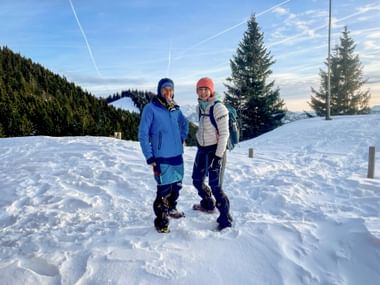
Two women in winter gear with snowshoes standing on snowy trail at Schafbergalm. Mountain forest and blue sky with contrails in background.

Practical tips

  • Drink enough to keep warm. Your energy consumption increases in the cold, so we recommend a thermos flask and, in frosty conditions, no plastic bottles, which freeze even faster on the outside of your rucksack.
  • Pack sufficient provisions. Before setting off on your hike, check whether there are any planned places to stop for refreshments and that these are actually open.
  • Eat foods that do not freeze. Bananas turn brown. Sandwiches with tomatoes or cucumbers get wet and do not improve in frost. Glucose tablets, chocolate, waffles, biscuits, bars or pouches are more suitable. Breaks in the cold usually do not last very long. Important: Be sure to eat before you get hungry.
  • Do not overexert yourself; in winter, you need to conserve energy for emergencies (equipment failure or unexpectedly difficult conditions). Breathing is more strenuous for the lungs in winter.
  • If you stop at a hut, be sure to take off and/or change your clothes. Only put them back on before setting off on the next stage. This will ensure you stay dry at all times.
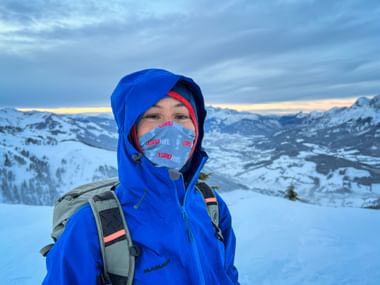
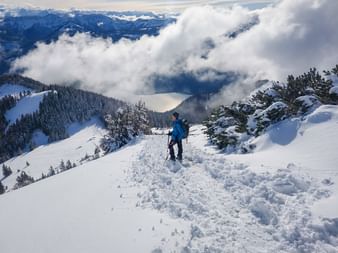
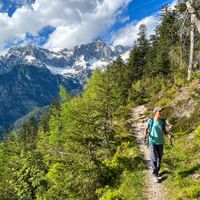
Person in blue winter jacket and face mask with backpack on snowy mountain summit in Salzburg, with snow-covered peaks and valley visible.

Wonderful Salzkammergut: Where lakes glisten and tradition lives on

Classic above Lake Wolfgang: Around the Sparber

This route high above Lake Wolfgang is a real classic – varied, diverse and, in winter, a little adventure in nature. Depending on the snow conditions, gaiters are often sufficient, but on days with deep snow, it is worth taking snowshoes with you. The tour leads through fantastically idyllic winter corners, especially around the Schartenalm. From here, an impressive view opens up of the steep Sparber rock face and the imposing front of the Bleckwand – a panorama that is even more special in winter.

Our tip: Walk counterclockwise. This way, you will tackle the steepest part of the ascent first, then enjoy sunny alpine pastures and reach the perfect place to stop for refreshments about halfway along the route: the Bergheimat inn. There you can enjoy wonderful, homemade Strobler home cooking – we particularly recommend the dumplings, the delicious cheesecake and the apple strudel.

Winter hiker with poles walking through deep snow past a wooden mountain hut, with snow-covered peaks and forest in the background.

Around the Sparber for leisure hikers

If you prefer a more leisurely pace, start in Strobl and hike only as far as Kleefeld or continue on to Bergheimat. You can also stop for refreshments at the Kleefeld wildlife park. The wildlife enclosure trail around Kleefeld is almost always well groomed – usually by tractor as part of the wildlife feeding programme. This means that this section can usually be easily navigated without snowshoes.

Icicles hanging from a mountain hut roof with bright sunlight shining through. Snow-covered landscape with trees and blue sky in background.

The Postalm: A winter touring paradise

In winter, the Postalm is a first-class touring paradise. On a sunny plateau between 1,200 and 1,700 metres above sea level, numerous rewarding summit destinations await you – ideal for skiing and snowshoeing. In addition, there are around 20 kilometres of groomed winter hiking trails. Depending on the snow conditions – whether soft, hard, deep or slightly icy – they can be leisurely or quite challenging.

Along the way, several rustic alpine huts invite you to stop for a bite to eat. Particularly popular are Hans Huber, Eurohike Premium Partner, and Liesi from the Stroblerhütte, who serves up authentic hut delicacies.

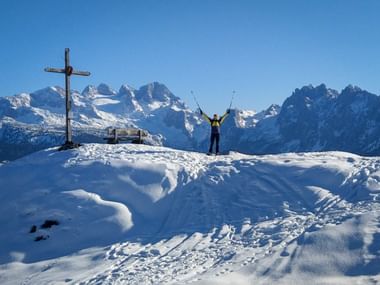
Hiker with raised ski poles celebrating at snowy Bodenberg summit with wooden cross, overlooking snow-covered mountain peaks under clear blue sky.

Touring tips for every taste on the Postalm

Pitschenberg – on skis or snowshoes

One of the longer, truly dreamlike tours in gently rolling alpine pastureland and through sparse larch forests. Only the final ascent to the summit is somewhat steeper. At the top, you can enjoy a fantastic view down to the lake. Incidentally, this route is also used by Eurohike alpine hikers on their way from the Genneralm to the Postalm – perfect for family adventures too.

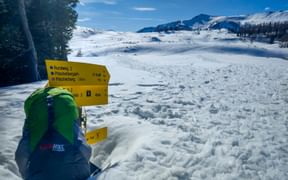
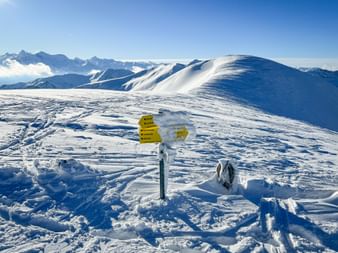
Yellow hiking signpost with backpack in snowy landscape at Postalm Pitschenberg. Snow-covered mountains and blue sky in background.

Moosalm circular walking route

A long but technically straightforward tour on the quieter, almost deserted side of the Postalm. Ideal for anyone seeking peace and quiet in the winter landscape.

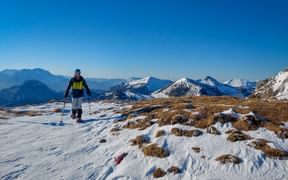
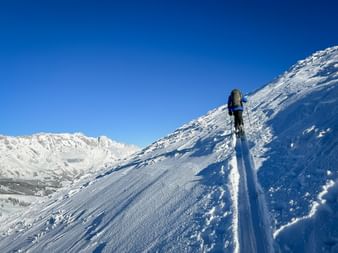
Hiker with poles on snowy mountain trail at Postalm Moosalmrunde with snow-covered peaks and blue sky in background.

Thorhöhe & Windkogel

Two sunny peaks on the upper Postalm that can be reached quickly; you will reach your destination in about an hour. Perfect for a short, enjoyable tour with sweeping panoramic views. For a leisurely finish, we recommend stopping off at the Schafbergblickhütte.

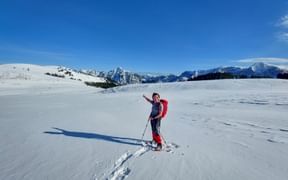
One hiker with red backpack and poles waves on snowy Postalm plateau. Mountain peaks visible under clear blue sky in background.
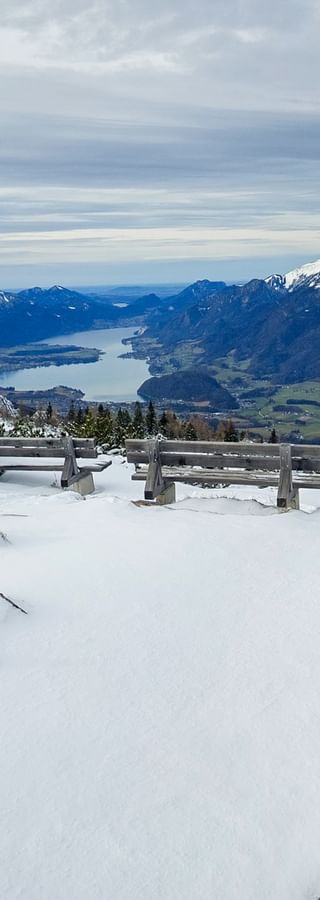
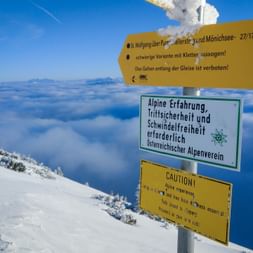
Hiking signpost in snow on Katrin mountain with yellow and blue directional signs, wooden benches, and panoramic view of lake and mountains.

Winter experience Katrin

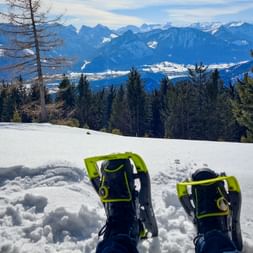
The Katrin mountain, towering above Bad Ischl, is a real insider tip in winter for anyone who loves panoramic views. Once you reach the top by cable car, a small winter paradise opens up before you. From the mountain station, a beautiful circular route leads over the Adamkogel and on towards the Feuerkogel. The nature trail is mostly groomed, but it is still advisable to take snowshoes with you so that you can enjoy the route at a leisurely pace.

Those who prefer a more athletic challenge can tackle the climb from Bad Ischl on foot and then take a leisurely gondola ride down into the valley. Alternatively, if there is sufficient snow, it is even possible to ski down. However, this option is only suitable for those who are in good physical condition. Your efforts will be rewarded with a cosy stop at the mountain hut and – as a highlight – an impressive view of the Dachstein massif.

Wolfgangsee region and inner Salzkammergut

The Wolfgangsee region and the Inner Salzkammergut around Bad Goisern and Gosau offer a wealth of winter hiking trails that are easy to tackle even without alpine experience. Thanks to the mostly idyllic routes close to the valley, many tours can be undertaken without any problems even on snowy days. Clear lakes, snow-covered forests and the impressive mountain backdrop create a real winter wonderland feeling.
Whether it's leisurely walks along the lake or easy climbs to vantage points – every hiker will find suitable trails here to enjoy winter actively and in a relaxed manner. Otherwise, feel free to enquire at the local tourist office.

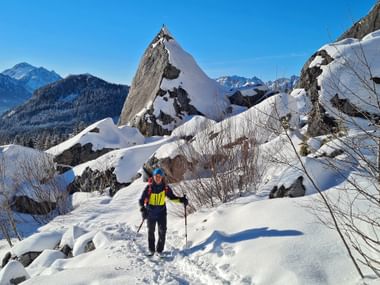
Winter hiker with backpack and poles on snowy trail near distinctive rock formation Predigtstuhl with mountain panorama under blue sky.

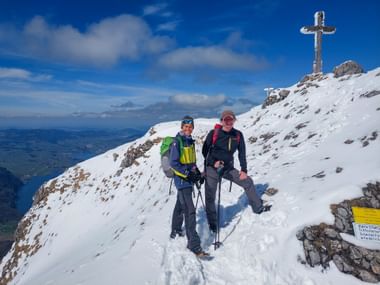
Schafberg

The sunny winter hikes on the south side of the Schafberg are particularly rewarding. Although they are considered long and quite challenging – and not entirely without danger, especially in winter – the effort is well worth it. At the top, near the mountain hotel, you will usually find shelter from the wind, and the view is simply breathtaking: a panorama of ten or more lakes that will quickly make you forget all your exertions.

Tip: For those who want to get a taste of what to expect or check the current weather conditions, it is worth taking a look at the Panomax camera on the Schafberg. This allows you to see immediately where the fog is and where the sun is already waiting.

Two hikers in winter gear standing on snowy Schafberg summit with metal cross and mountain panorama under blue sky.

Zwölferhorn Panorama Tour

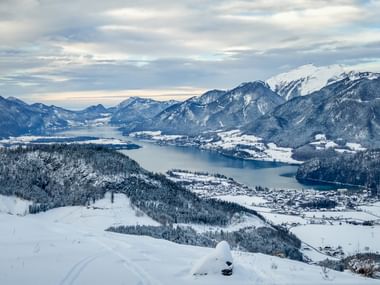
A real winter highlight is the groomed winter hiking trail, which offers fabulous panoramic views in all directions. The cable car ride makes it particularly easy to get there. From the exit, the summit is easily reached in a few minutes and the subsequent circular trail of about 1.5 hours leads through open snowfields and past magnificent viewpoints directly above the glittering Lake Wolfgang.
A cosy stop at a mountain hut rounds off the experience before you return to the valley, either relaxed by gondola or sportily on foot.

Aerial winter view of Wolfgangsee surrounded by snow-covered mountains and forests. Villages dot the shoreline under a cloudy sky.

The most popular hiking tours in the Salzkammergut

Holiday jewel Pinzgau: Alpine diversity between glaciers, alpine pastures and valleys

Maria Alm to Dienten

The Maria Alm – Dienten stage also offers attractive opportunities in winter. Although the entire route is not always accessible depending on snow conditions, the Marbachhöhe and Klingspitz peaks are often easily accessible. However, this requires a good level of fitness and confidence with snowshoes, as the ascents are challenging in winter and demand a good feel for the terrain and snow conditions. Those who meet these requirements will be rewarded with magnificent views over the Hochkönig massif and the vast snow-covered expanses of the region.

Winter hiker with backpack and poles walking through deep snow in Maria Alm-Dienten. Snow-covered trees against clear blue sky.

About the Schwalbenwand wall

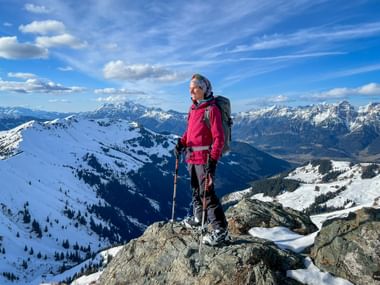
A particularly impressive winter tour, but only suitable for those who are absolutely fit, leads over the Schwalbenwand – with a magnificent view of the Pinzgau, the Salzburg peaks and across to the Kitzbühel Alps. The route from Kammer Castle to Maria Alm requires stamina, sure-footedness and perfect self-assessment, but rewards you with one of the most beautiful panoramic ridges in the region.
At the end, the cosy Hinterreit mountain inn awaits, where you can not only enjoy the finest Pinzgau cuisine, but with a little luck also watch professionals such as Lindsey Vonn training on the ski lift.

The easy option is directly from Maria Alm to Gasthof Hinterreit – a gentle climb that offers almost the entire experience without much effort. The route via the Friedenskapelle chapel is ideal for anyone who wants to soak up the winter atmosphere without climbing too high.

Hiker in pink jacket with backpack and poles standing on rocky summit at Schwalbenwand, surrounded by snow-covered Alpine peaks under blue sky.

From Kammer Castle to Kammeregg Alm

If you want to take it easier, start directly at Kammer Castle and hike only as far as the Kammeregg Alm. This variant is much easier, but leads through beautiful winter landscapes and offers a great resting place with magnificent views at the destination. After returning, it is worth stopping off at Kammer Castle (this is a Eurohike Charm Hotel with a great atmosphere). Perfect for rounding off the tour with a warm room and good food.

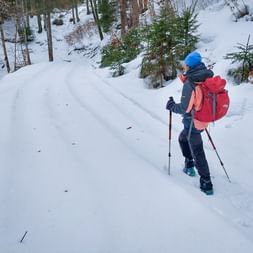
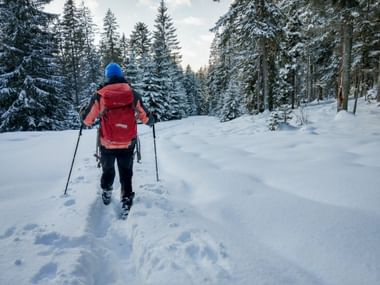
Hiker with red backpack and blue hat walking with poles through deep snow on forest trail surrounded by snow-covered conifer trees.
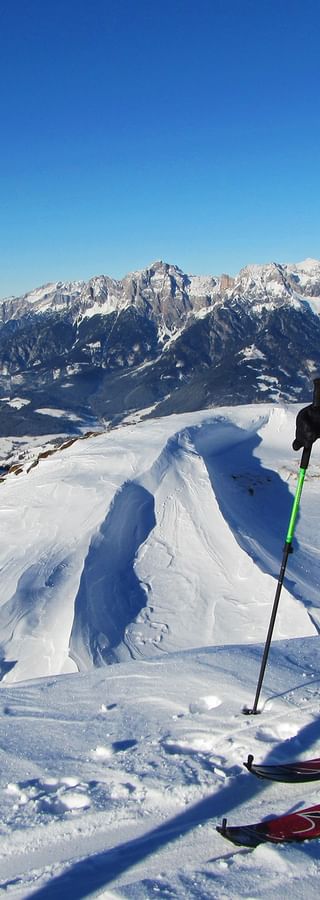
Skier in blue jacket with poles on snowy ridge at Hochkönig, with snow-covered mountain peaks and valley visible under clear blue sky.

The Hochkönig mountain

Even in winter, there are several stages around the Hochkönig that are surprisingly easy to tackle. The connection between Dienten and Arthurhaus, as well as the circular hike from Arthurhaus with a detour to the Hochkeil summit, are often easily accessible (see our two tours ‘Salzburg’s Peaks & Kitzbühel Alps’). Snowshoes are often required; please also note the local avalanche situation. Despite the relatively easy trails, the landscape there conveys a genuine high-alpine feeling. The Hochkeil is also marked as a snowshoe trail and is mostly groomed – ideal for anyone looking for a little more winter adventure. The Arthurhaus, a cosy Eurohike-mountain hotel with character, is also open in winter and offers the perfect Pinzgau refreshment after the tour.

Winter hiking around Lake Zell

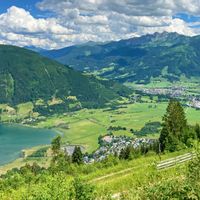
The area around Lake Zell is also almost always wonderful for hiking in winter. The paths along the shore are usually well cleared and can generally be walked on without special winter equipment. Gentle shore passages, mountain panoramas and the often mirror-smooth lake make the circuit a relaxing winter classic – ideal for connoisseurs, walkers and anyone looking for an easy, scenically impressive winter trail.

The Hohen Tauern

In winter, the lonely valleys seem even more pristine and wild than in summer, when they are already impressive as national park areas. Here, you will find pure solitude – an experience that is really only suitable for experienced winter hikers. The valley paths, i.e. the main paths at the bottom of the valley, are often easy to walk on, but it is essential to be aware of the avalanche situation. There are no places to stop for refreshments, so make sure you dress warmly, are well prepared – and marvel at the scenery.
Despite the remoteness, you will usually find a solid infrastructure along the valley access roads and in the villages before you immerse yourself in the silence of the valleys.

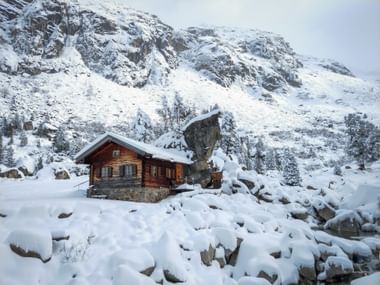
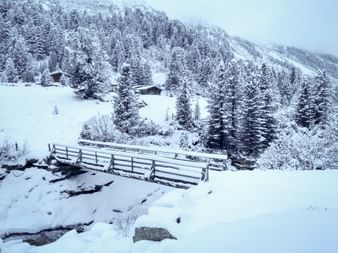
Wooden alpine hut with stone foundation in snowy Obersulzbachtal valley, Hohe Tauern. Snow-covered rocks and mountains surround the cabin.

Pinzgau's most beautiful hiking trips

Travel reports: Hiking in the Salzkammergut and Pinzgau regions

You now receive special conditions when you book a trip.