1
Jump to content
(Link opens in a new tab)
Jump to footer
(Link opens in a new tab)

Discover Europe’s wine regions on foot

In vino veritas: Among vineyards, cellars, and stories
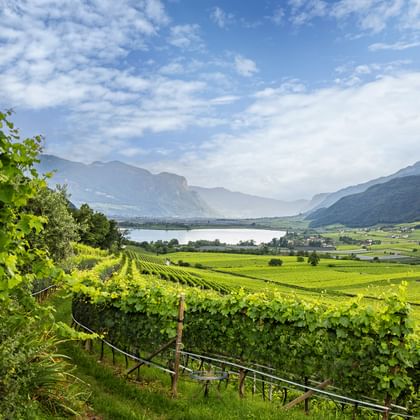
Lush green vineyards in rows on hillside overlooking Lake Garda with mountains in background under partly cloudy sky.

Wine tells a story: of soil and climate, of traditions and generations who tend their vines with devotion. When you hike through wine regions, you experience these stories in a truly immersive way. Instead of simply tasting a glass, you soak in the landscape where it was born: climbing terraced slopes, following ancient trade routes along rivers, and wandering through villages where wine has been part of daily life for centuries.

This blend of nature and indulgence is what makes hiking wine trails so special. Whether you’re exploring the Moselle, wandering through the Wachau, strolling the gentle hills of Tuscany, or taking in sweeping views in Spain’s wine regions, every step reveals a new perspective, every viewpoint shares another chapter of local wine culture.
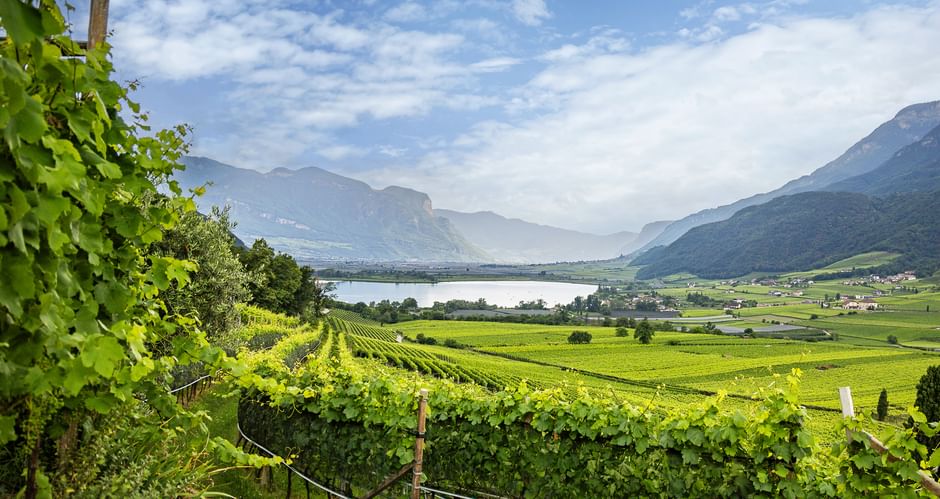
Lush green vineyards in rows on hillside overlooking Lake Garda with mountains in background under partly cloudy sky.

On the trail of fine wines

Wine trails are more than just journeys of indulgence.

In the morning, dew sparkles on the grape leaves. By midday, narrow trails wind through sun-drenched vineyards, and in the evening, a glass of wine awaits, crafted right where you spent your day exploring. Europe’s wine regions aren’t just for tasting, they’re meant to be discovered on foot. Those who take their time through the landscape uncover the stories behind every vintage: the people who shape it, the traditions that accompany it, and the cultural landscapes that have grown over centuries.

This is the true magic of wine hiking trails: they blend nature, culture, and culinary delights in ways that go far beyond traditional wine tasting. Instead of simply sitting at a tasting table, hikers wander through terraced vineyards, follow ancient trade and pilgrimage routes, stroll past historic cellar lanes, and meet passionate winemakers who shape their region with heart and soul. Every stage reveals new perspectives on landscapes deeply intertwined with viticulture, letting you experience firsthand how climate, soil, and tradition define the character of a region. Wine becomes more than just a pleasure in your glass—it’s the thread that weaves together a journey, showing you Europe’s most flavorful side, step by step.

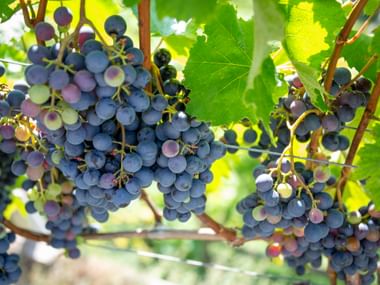
Clusters of dark purple wine grapes hanging on vines with green leaves in South Tyrol, sunlight filtering through the foliage.

Austria: Where wine and cultural landscapes blend together

Hiking through the Wachau

When it comes to wine hiking trails in Europe, the Wachau is simply unmissable. Between Krems and Melk, steep terraces, dry stone walls, and historic wine villages shape the scenery. The Danube winds its way through this UNESCO World Heritage site, guiding hikers along panoramic paths through some of Austria’s most renowned vineyards. Here, centuries-old winemaking traditions meet a breathtaking river landscape, famous not only for its wines but also for its apricots, historic abbeys, and charming cellar lanes.

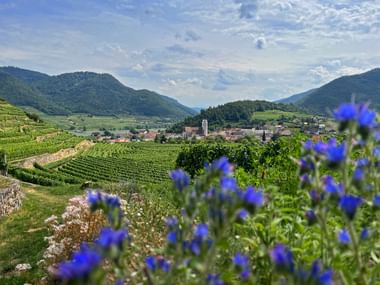
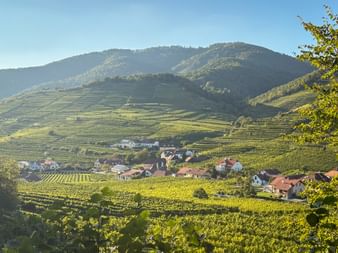
View of Spitz village in Wachau valley with terraced vineyards, mountains, and blue wildflowers in foreground under cloudy sky.

World Heritage Trail Wachau

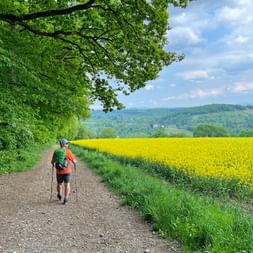
In the Wachau, the Danube is even more beautiful than anywhere else. Gentle breezes and steep slopes create the perfect conditions for growing wine and fruit. Our hiking week follows the “Welterbesteig Wachau", tracing the ridges of the Danube Valley. Along these varied hiking routes, you’ll soak in breathtaking views of one of Austria’s oldest cultural landscapes, with its iconic vineyard terraces, apricot orchards, and the mighty Danube flowing below. You’ll wander past rugged cliffs, countless lookout points, and over rolling hills through lush vineyards. The small villages of the Wachau are especially charming and welcoming, offering not only fine wines but also the famous apricot pancakes for pure indulgence.

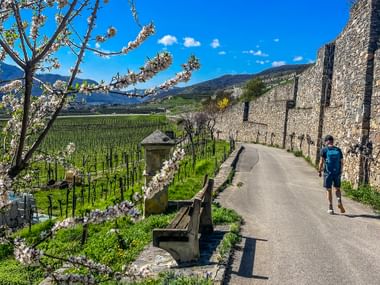
Hiker with backpack walking on path beside stone wall in Wachau. Blooming apricot trees and vineyards visible under blue sky.

The wine region Wachau

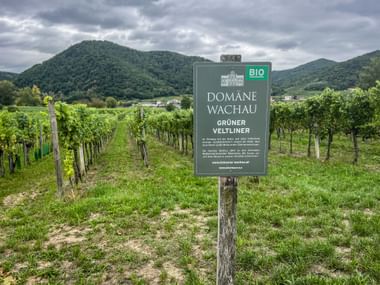
When it comes to wine hiking trails in Europe, the Wachau is simply unmissable. Between Krems and Melk, steep vineyard terraces, dry stone walls, and the Danube shape the landscape. The Danube winds its way through this UNESCO World Heritage site, guiding hikers along panoramic paths through some of Austria’s most renowned vineyards. Warm Pannonian influences, cool breezes from the Waldviertel, and the terraced slopes create the perfect conditions for distinctive white wines. The region is also famous for its apricots, historic abbeys, and charming cellar lanes.

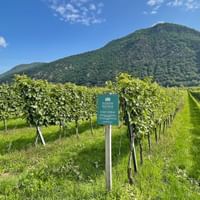
Sign for Domäne Wachau organic Grüner Veltliner vineyard in rows of green grapevines with forested hills under cloudy sky in Wachau.

Typical grape varieties and wines

  • Grüner Veltliner
  • Riesling
  • Neuburger
  • Pinot Blanc


What makes it special:
The Wachau is especially renowned for its quality levels Steinfeder, Federspiel, and Smaragd. This region stands for elegant, mineral-driven white wines with remarkable finesse. Many vineyards are perched on steep terraces, still tended by hand to this day. Here, wine, landscape, and centuries-old culture are inseparably intertwined.

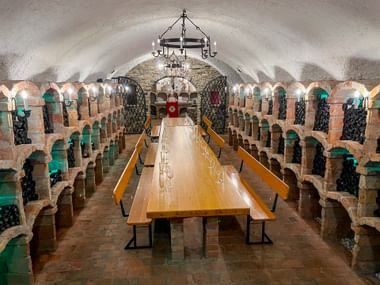
Vaulted wine cellar in Wachau with brick arches, wooden tasting table, and wine bottles stored in alcoves. Iron chandelier hangs from ceiling.

Germany: Between Vineyards, Castles, and River Valleys

Explore the Rhine and Moselle

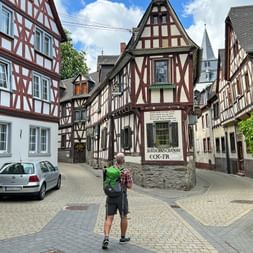
Germany is one of Europe’s top destinations for wine hiking tours. Especially along the Rhine and Moselle, the trails lead through landscapes shaped by centuries of winemaking. High above the rivers, hiking paths wind through steep vineyards, past medieval castles, historic wine villages, and breathtaking viewpoints. Riesling is everywhere here, and just like the scenery, it tells the story of a long tradition where nature, culture, and pure enjoyment are closely intertwined. Exploring on foot lets you experience Germany’s famous wine regions from a perspective that’s often hidden from those traveling by car.

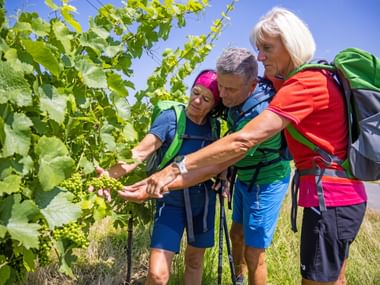
Three hikers with backpacks examining green grape clusters on vines in a German vineyard under blue sky along the Rheinsteig trail.

The Moselle wine region

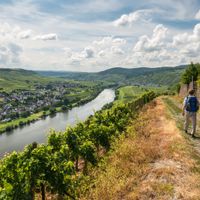
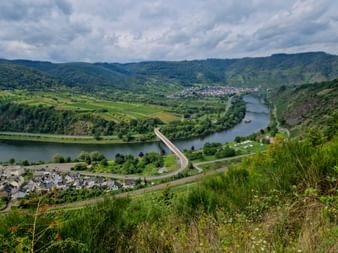
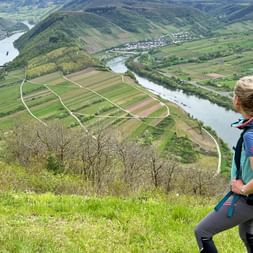
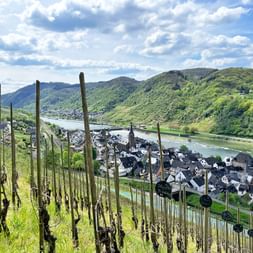
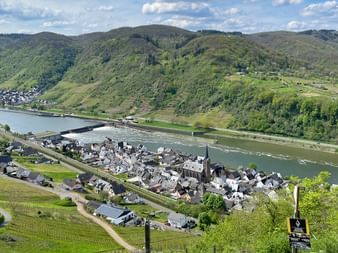
The Moselle is one of Germany’s most historic wine regions. Its steep, often terraced vineyards rise along the winding river, creating a landscape that’s truly unique. Sun-drenched slate slopes provide the perfect conditions for winemaking and give the region its unmistakable character.

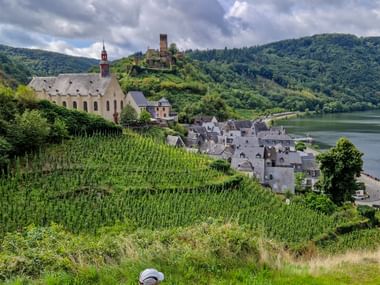
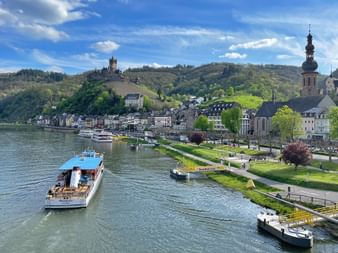
Beilstein village on the Mosel River with vineyards, historic church, and Burg Metternich castle ruins on hilltop. Green forested hills frame the scene.

Typical grape varieties and wines

The Moselle is home to some of the world’s most renowned Rieslings. You’ll also find Elbling, Pinot Blanc, and Pinot Gris among the region’s specialties. Moselle Rieslings are celebrated for their freshness, elegance, and distinctive minerality.

What makes it special:
The combination of dramatic steep slopes, slate soils, and the winding river creates one of Europe’s most impressive wine landscapes. Hiking here brings you up close to the vineyards, and it’s easy to see why the Moselle enjoys such an outstanding reputation around the globe.

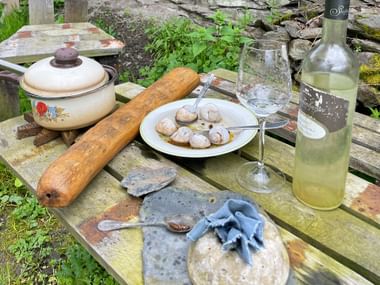
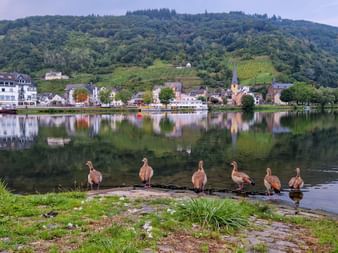
Rustic table with pot, baguette, plate of potatoes, wine glass, bottle, stone plates and cloth on weathered wooden bench in Traben-Trarbach.

The wine region of Rhineland-Palatinate

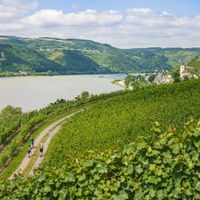
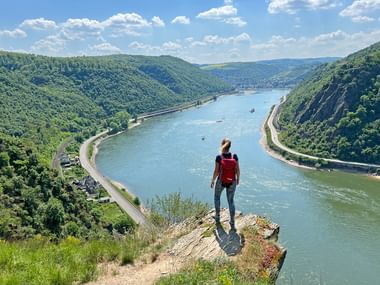
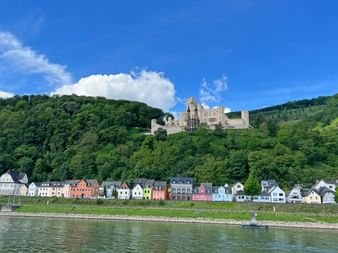
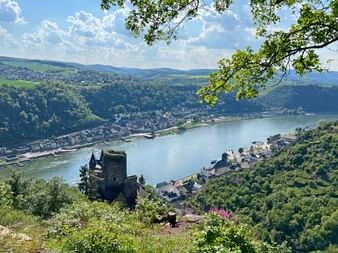
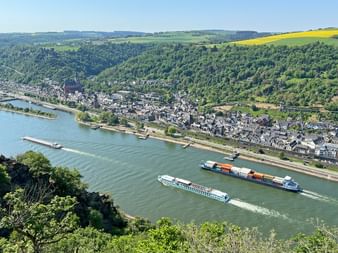
The Rhine is one of Europe’s most iconic wine landscapes. Steep vineyards, historic wine villages, and majestic castles line its banks, creating a scenery that’s simply unforgettable. The UNESCO World Heritage Upper Middle Rhine Valley is a place where winemaking, culture, and history come together in a truly unique way.

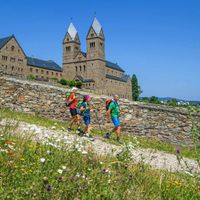
Hiker with red backpack standing on rocky cliff overlooking the Rhine River valley with forested hills and cargo ships on the water.

Typical grape varieties and wines

This region is especially known for its Riesling, ranging from fruity and fresh to bold and spicy. The selection is rounded out with Pinot Blanc, Pinot Gris, and Pinot Noir.

What makes it special:
Few wine regions combine such spectacular river views with a remarkable density of castles, palaces, and historic towns. Hiking here reveals just how closely winemaking and the cultural landscape along the Rhine have been intertwined for centuries.

Schloss Johannisberg with tower surrounded by vineyard rows under blue sky. Trees frame the historic building on the Rheinsteig.

Italy: Where savoring life is an art

From alpine peaks to Mediterranean shores

Italy has a way of turning savoring life into an art form like nowhere else. Its hiking wine regions are just as diverse. In South Tyrol, sun-drenched vineyards and alpine peaks create a stunning backdrop, while Tuscany is all rolling hills, cypress-lined avenues, and historic villages. Piedmont is shaped by renowned vineyards and time-honored wine cellars, and Friuli Venezia Giulia surprises with a perfect blend of alpine and Mediterranean influences. What all these regions share is that they’re best explored on foot. Every path leads through a landscape where wine, cuisine, and culture are inseparably woven together.

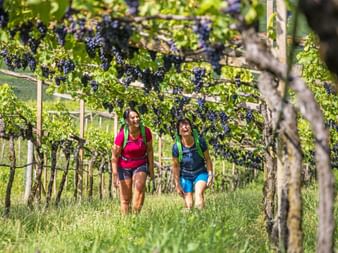
Three hikers with backpacks walking through vineyard rows near Lake Kaltern in South Tyrol, with mountains in the background.

Italy’s wine regions, from mountain heights to the sea

Italy is one of Europe’s most diverse wine countries. From the alpine landscapes of South Tyrol to the rolling hills of Tuscany and the renowned vineyards of Piedmont, you’ll find a wide range of wine styles. Each region brings its own traditions, grape varieties, and unmistakable character.

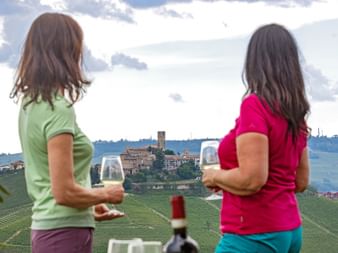
Montforte d'Alba village in Piedmont's Langhe region, with historic buildings on a hilltop surrounded by terraced vineyards under blue sky.

Typical grape varieties and wines

  • Sangiovese from Tuscany
  • Nebbiolo and Barbera from Piedmont
  • Vernatsch and Lagrein from South Tyrol
  • Friulano from Friuli


Famous wines include Chianti, Brunello di Montalcino, Barolo, and Barbaresco.

What makes it special:
Few countries weave wine so deeply into their regional identity and way of life. In South Tyrol, alpine freshness meets Mediterranean influences, while Tuscany’s world-famous red wines are crafted among cypress trees and rolling hills. Piedmont, meanwhile, is home to some of Italy’s most renowned reds.

Person in purple shirt grating Parmesan cheese over pasta with tomato sauce. A glass of white wine stands on the red placemat beside the plate.

There are countless ways to reach Italy’s wine regions.

France: Savoring centuries of tradition

Wine hiking in Burgundy, Alsace, and Provence

For many, France is the very definition of wine culture. Between historic villages, gentle hills, and endless vineyards, you’ll find a hiking world that feels tailor-made for exploring step by step. Here, wine is much more than a crop — it’s woven into the region’s identity and way of life. Along the way, you’ll encounter time-honored wineries, local specialties, and a culture of enjoyment that’s cherished to this day. Hiking through France’s wine regions means discovering not only extraordinary landscapes, but also the stories and people behind the world-famous wines.
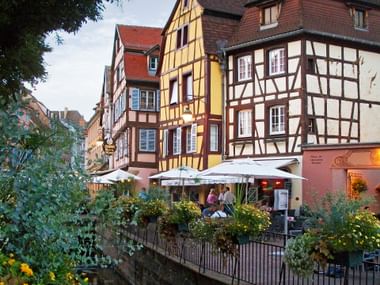
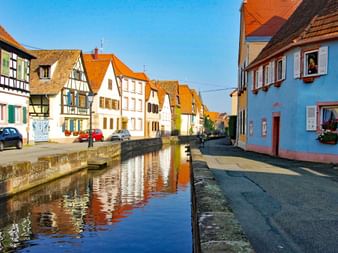
Colorful half-timbered houses along a canal in Colmar's Little Venice district. A restaurant terrace overlooks the water, surrounded by greenery.

The Burgundy wine region

Burgundy is considered one of the world’s most prestigious wine regions. Gentle hills, historic wine villages, and carefully defined single vineyards shape the landscape. Here, the concept of terroir — the unique interplay of soil, climate, and location — has been at the heart of winemaking for centuries.

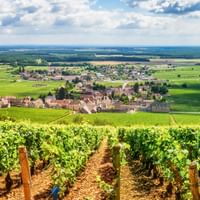
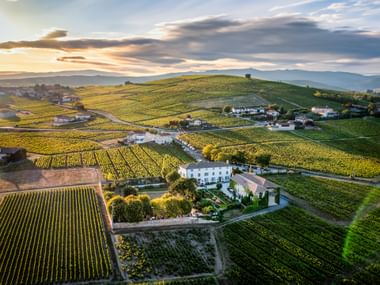
Aerial view of rolling vineyards in Burgundy near Mâcon at sunset, with white buildings nestled among green vine rows and hills in the distance.

Typical grape varieties and wines

Burgundy is home to world-class Chardonnay and Pinot Noir wines, with Aligoté and Gamay playing a smaller role. The region offers everything from elegant, mineral-driven white wines to refined, complex reds.

What makes it special:
Nowhere else is a wine’s origin celebrated as passionately as in Burgundy. Sometimes, two vineyards sit side by side, yet the wines they produce are worlds apart in character. This remarkable diversity is exactly what makes the region so endlessly fascinating for wine lovers.

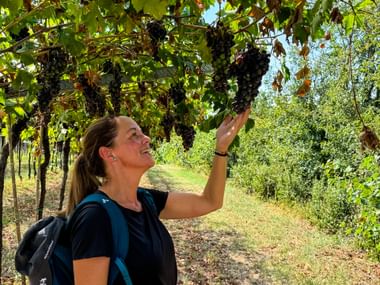
Female hiker with backpack reaching up to touch dark grapes hanging from vines in a sunny Burgundy vineyard, smiling as she looks up.

The Alsace wine region

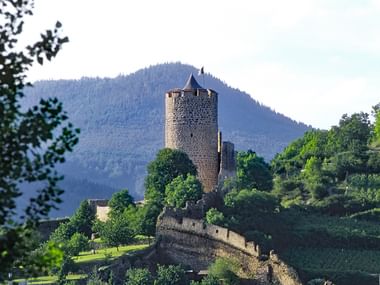
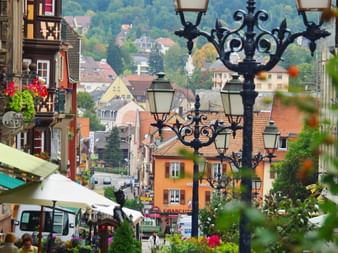
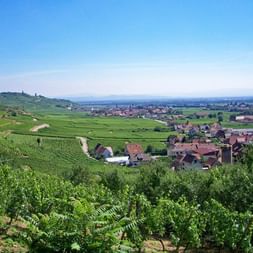
Framed by the Vosges mountains and the Rhine, Alsace stretches out as a narrow ribbon of vineyards, half-timbered villages, and historic towns. The region enjoys abundant sunshine and a relatively dry climate, creating perfect conditions for growing wine.

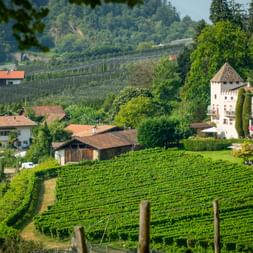
Stone tower with conical roof on hillside in Alsace, surrounded by vineyards and green trees, with forested mountains in the background.

Typical grape varieties and wines

Alsace is renowned for its aromatic white wines. Riesling, Gewürztraminer, Pinot Gris, and Muscat are especially widespread here. Most wines are crafted as single varietals, allowing each grape’s unique character to shine through.
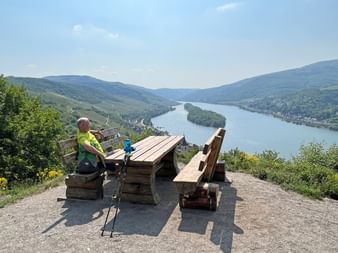
What makes it special:
The blend of French flair and German heritage gives Alsace its own unique charm. Between rolling vineyards, medieval alleyways, and flower-adorned villages, hikers experience one of Europe’s most picturesque wine landscapes.

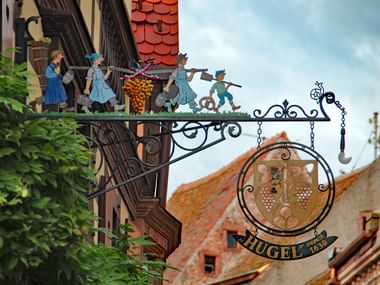
Ornate wrought iron sign for Hugel winery in Alsace, featuring painted figures in traditional dress and a circular emblem with grape motifs.

The Provence wine region

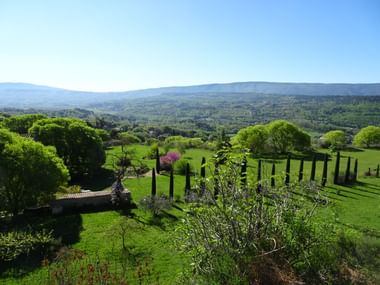
Provence is all about Mediterranean joie de vivre, fragrant fields of herbs, and sun-drenched vineyards. Amid olive groves, cypress trees, and historic villages, wines are crafted that capture the spirit of southern France.
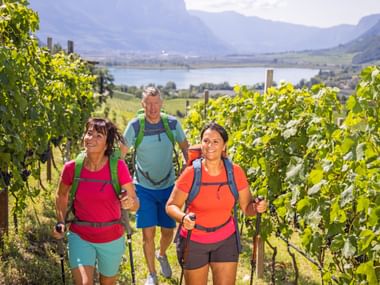
Panoramic view of green rolling hills and vineyards in Provence. Lush gardens with cypress trees in foreground, distant mountains under clear blue sky.
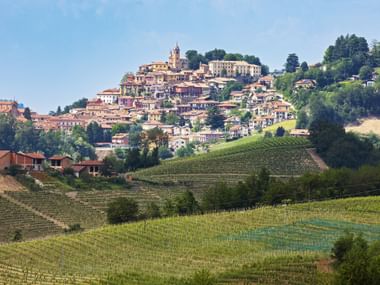
Typical grape varieties and wines

Provence is famous around the world for its rosé wines. The region also produces reds and whites from grape varieties like Grenache, Syrah, Mourvèdre, Cinsault, and Rolle (Vermentino).

What makes it special:
Few wine regions blend wine, cuisine, and Mediterranean scenery as harmoniously as Provence. The proximity to the sea, the region’s unique light, and its relaxed atmosphere make Provence the very essence of southern French indulgence.

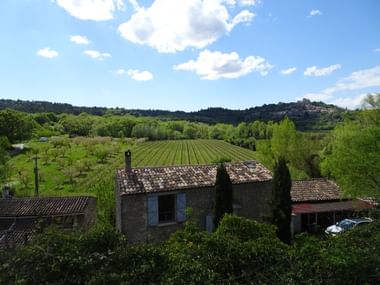
Stone farmhouse with terracotta roof surrounded by green vineyards in Provence. Rolling hills and a hilltop village visible in the distance.

Spain: sunshine, wine, and endless horizons

Mediterranean hiking on Majorca and the Canary Islands

In southern Europe, sun, open spaces, and a Mediterranean way of life shape the wine landscapes. Spain’s wine regions captivate with their diversity, stretching from gentle hills to dramatic mountain backdrops. Hiking trails wind through vineyards, olive groves, and historic villages where winemaking has been part of daily life for centuries. The blend of warm climate, regional cuisine, and breathtaking scenery makes Spain an especially appealing destination for those who love to savor their hikes. Every stage becomes a journey of discovery, where nature and culinary culture come together in perfect harmony.

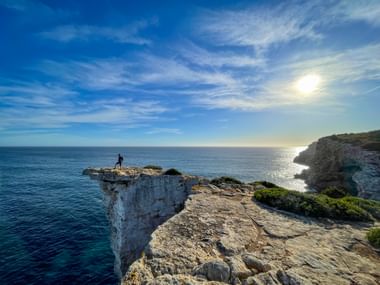
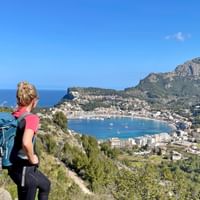
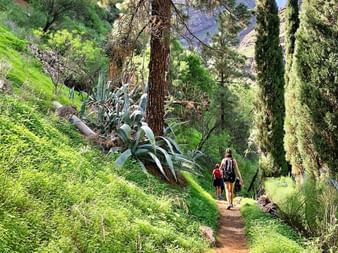
The Piquetes rock formation

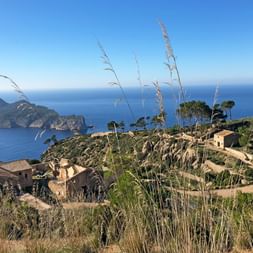
The Majorca wine region

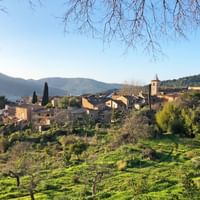
Majorca is so much more than a beach destination. In the heart of the island, vineyards, almond groves, and traditional fincas create a landscape that feels both authentic and timeless. Especially around Binissalem and Pla i Llevant, winemaking has a rich heritage that stretches back generations.

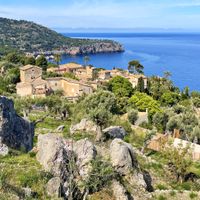
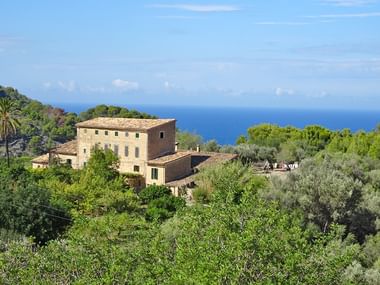
Traditional stone buildings in Deia, Mallorca, surrounded by lush Mediterranean vegetation with blue sea visible in the background.

Typical grape varieties and wines

Local grape varieties like Manto Negro, Callet, and Prensal Blanc play a key role alongside international types. These grapes produce vibrant reds, crisp whites, and distinctive blends brimming with character.

What makes it special:
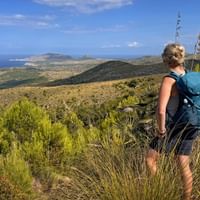
Majorca blends Mediterranean culinary culture with a landscape perfect for hiking. Exploring on foot reveals a quieter side of the island, where you can soak in the vineyards, historic villages, and the foothills of the Serra de Tramuntana up close.

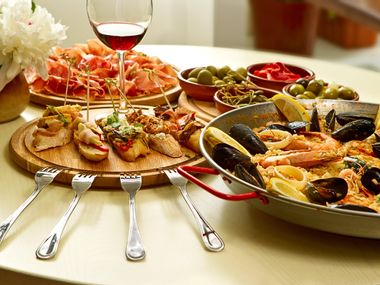
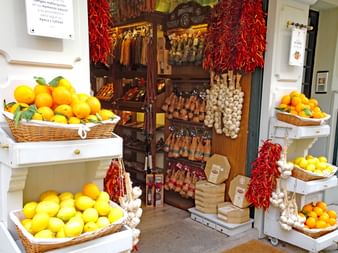
Spanish cuisine

The Canary Islands wine region

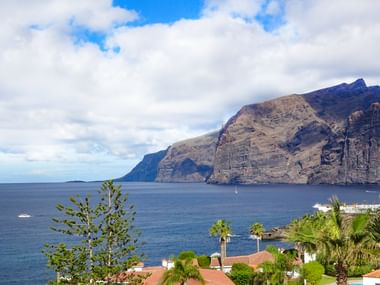
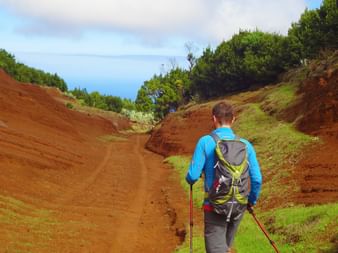
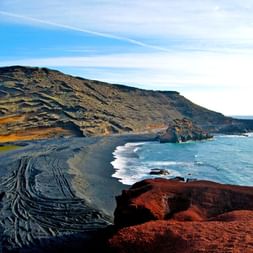
The wine landscapes of the Canary Islands are among the most extraordinary in Europe. Volcanic soils, a mild climate, and the islands’ location in the heart of the Atlantic shape the region’s winemaking. Many vineyards, with their dark lava fields, appear almost surreal.

Dramatic Los Gigantes cliffs rising from blue ocean waters on Tenerife, with palm trees and red-roofed houses in foreground under cloudy sky.

Typical grape varieties and wines

Local grape varieties like Manto Negro, Callet, and Prensal Blanc play a key role alongside international types. These grapes produce vibrant reds, crisp whites, and distinctive blends brimming with character.

What makes it special:
The combination of volcanic landscapes and winemaking is almost unique in Europe. On Lanzarote, vines grow in small hollows carved from volcanic rock, protecting them from wind and drought. This results in wines found only in the Canary Islands, each bottle capturing the island’s extraordinary character.

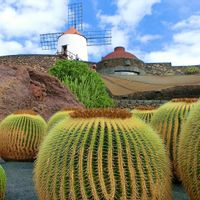
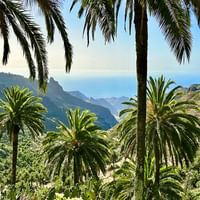
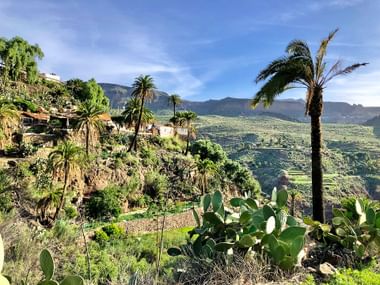
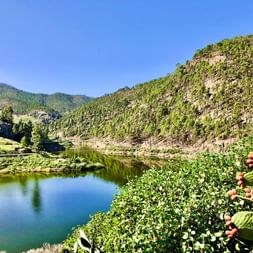
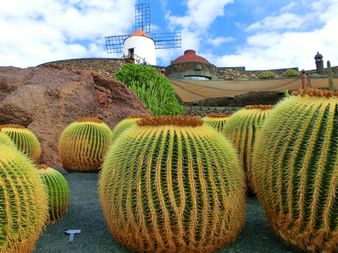
Palm trees and cacti can be found all over the island

Experience Europe’s wine regions with all your senses

Wine hiking trails bring together everything that makes a tour truly special: time spent in nature, authentic encounters, and delightful discoveries. Walking through vineyards, you’ll enjoy breathtaking views and varied paths, while immersing yourself in the culture and traditions of each region. Between historic wine villages, sun-drenched slopes, and inviting places to stop, you’ll quickly sense how closely landscape, cuisine, and local lifestyle are intertwined.

Whether you’re following the Danube through the Wachau, strolling along the banks of the Rhine and Moselle, wandering the hills of Tuscany, or exploring the wine regions of France and Spain, every area tells its own story. That’s the unique appeal of these tours. Wine becomes much more than a pleasure in your glass — it’s a true expression of its homeland and a guiding thread that leads hikers through some of Europe’s most beautiful cultural landscapes. Set out on these trails and you’ll discover not only new regions, but also the art of savoring every step.

Why wait? Wanderlust is calling for 2027!
Discover now & book
/en/walking-holidays/2027
Why wait? Book for 2027!

Whether it's Alpine panoramas or coastal trails – your dream hike awaits. Book our top tours for 2027 now! If the dates for your favorite tour aren’t online yet? Feel free to let us know and we’ll get in touch with you soon.

Discover now & book
Walking holidays 2027
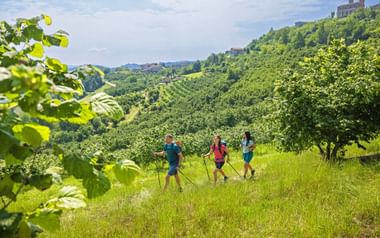
Three hikers in the hazelnut groves of Liguria
You now receive special conditions when you book a trip.