1
Jump to content
(Link opens in a new tab)
Jump to footer
(Link opens in a new tab)

Step by step across the Alps

The Making of the Alpine Crossing from Garmisch to Sterzing
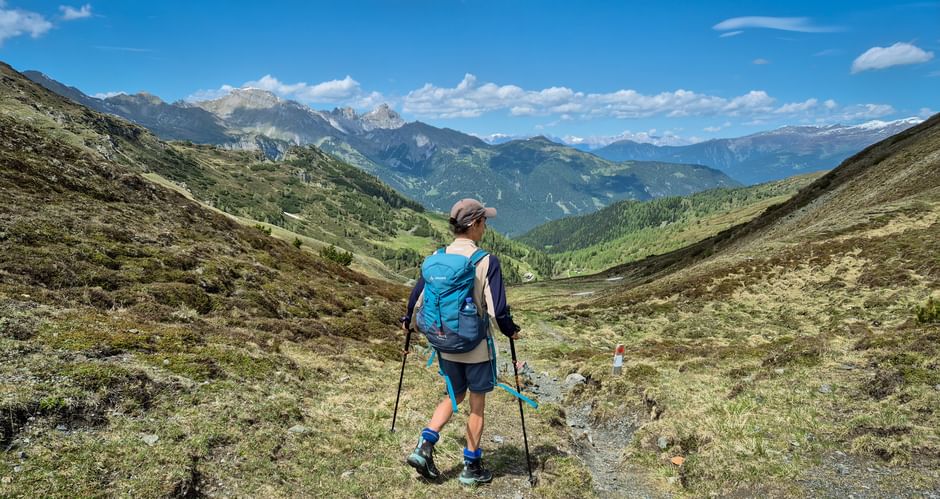
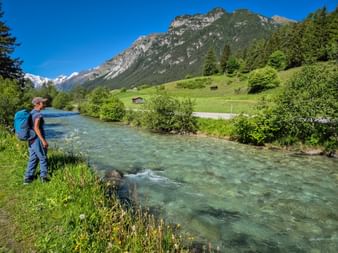
Hiker in the Gschnitztal valley with panoramic view

Starting in 2026, Eurohike is adding a brand-new highlight to our program: the spectacular crossing of the Alps from Garmisch to Sterzing. Like many other Eurohike Original tours, this one was developed personally by Christina from our Product Management team. Fueled by a wealth of ideas and plenty of motivation, she headed to Garmisch to find true "dream trails" across the Alps and unite them into one very special journey. Join Christina every step of the way as she explores the diversity of the Alps.

Hiker in the Gschnitztal valley with panoramic view

When passion becomes a profession

For me, as a product manager, "crossing the Alps on foot" doesn't mean "fulfilling a lifelong dream," as it does for many of our guests. I’ve crossed the Alps under my own power several times via various alpine routes. For me, it means developing, planning, scouting, and mapping out a new and exciting hiking tour. This isn't something I just dream up; it’s a hands-on, fascinating, and challenging task.

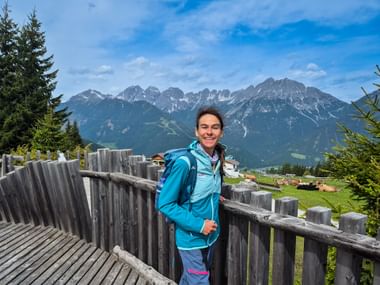
Smiling female hiker in blue jacket on wooden viewing platform with Alpine mountain range and valley with traditional buildings in background.

Alpine Crossings with Eurohike

Eurohike already offers two moderately difficult crossings - from Füssen to Merano and from Garmisch to Merano - as well as the famous E5 long-distance trail from Oberstdorf to Merano. We even offer the latter as a "Mini-Transalp" for families. Hiking over mountain passes, crossing national borders, trekking from valley to valley, stopping at mountain huts, and staying in a new place every night is nothing new to me. But it is always wonderful.

Every time I see the result of all that hard work in the catalog or on the website at the end of the year, I’m thrilled. The new crossing from Garmisch to Sterzing is an incredibly inviting and rewarding new journey! It makes you want to set off immediately, and I am convinced this tour will bring many hikers immense joy and wonderful memories.

I particularly love the stretch from Garmisch to Sterzing because you often have these stunning paths all to yourself. Plus, this crossing is especially "authentic." You conquer the ridges on foot, and transfers are rarely needed. Surrounded by truly wild mountain ranges, you can fully immerse yourself in pristine nature. Because things can get rugged out here, this tour includes options for very bad weather—or at least an alternative tip on how to spend the day hiking while still reaching your next accommodation.

And now, we can finally begin. I’d love for you to join me on my scouting tour as I developed this new Alpine crossing, which is already available to book on our website or through my wonderful colleagues in our Travel Specialists team.

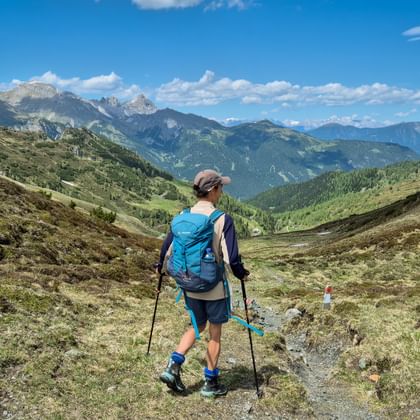
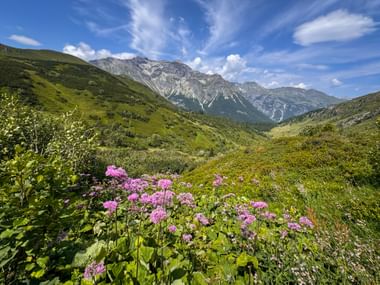
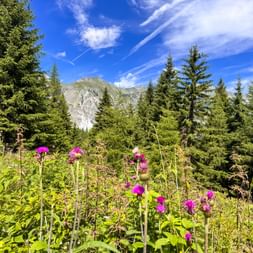
View of the valley from Sandjöchl towards the mountains and flowers

Starting in the Bavarian Zugspitze Town

The tour begins in Garmisch-Partenkirchen, the popular Olympic town at the foot of the Zugspitze. The first stage to Mittenwald leads through the impressive Partnach Gorge, then past the Eckbauer and over the Wamberg. Lautersee, Ferchensee, and the Laintal Gorge feel almost magical. Even though I’ve hiked this stage many times before, it always feels like “coming home” to the beloved Bavarian mountain landscape I’ve known since my youth.

A stroll through the violin-making town of Mittenwald, with its colorfully painted Lüftlmalerei houses, is always worthwhile, and a traditional Bavarian lunch makes for a particularly enjoyable stop along the way.

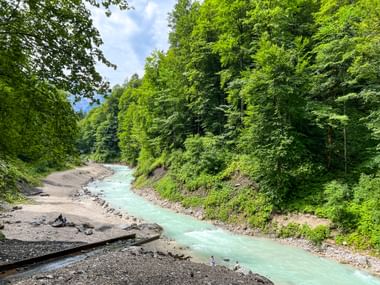
View of the Partnachklamm

Through the Wild Karwendel

Spectacular high-altitude trails to Innsbruck

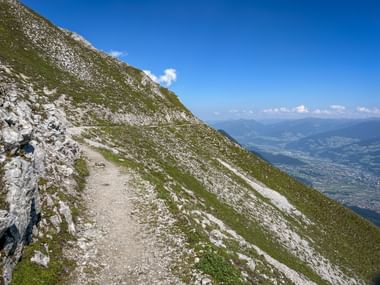
Well-warmed up from the relatively moderate first day, the route becomes increasingly alpine the next day. A national park taxi picks me up at the hotel to take me to the Möslalm, the starting point for today’s hike. Initially, I follow a peaceful creek path, but soon I approach the mighty jagged peaks of the Nordkette. I climb steadily until I reach the Pfeishütte, a legendary base for long-distance hikers and a welcome rest stop for me. The route continues along the high trail toward Innsbruck—on narrow paths along rock faces and vast gravel fields typical of the Karwendel mountains. The views reach deep into the Bavarian and Tyrolean ranges.

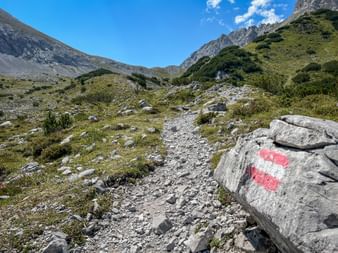
Gravel hiking trail on steep mountain slope near Hafelekarspitze with rocky terrain, green grass, and panoramic view of Innsbruck valley.

After a few small ridges and passes, I reach the Goetheweg near the Hafelekar cable car. Here, it’s buzzing with "sneaker tourists" and cable car day-trippers. I don't mind, though; the view and the atmosphere are simply stunning, especially when you’ve reached this point entirely under your own power. I soak up the afternoon sun and take the last cable car down to the valley.

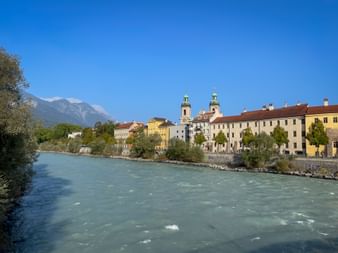
Once at the bottom, I explore Innsbruck's vibrant Old Town. There are numerous places to eat right along the Inn River, and I look forward to dinner with friends I’ve known since my university days. Countless tourists gather around the Golden Roof, Innsbruck’s landmark. What a contrast to the solitude of the mountains I explored earlier today!

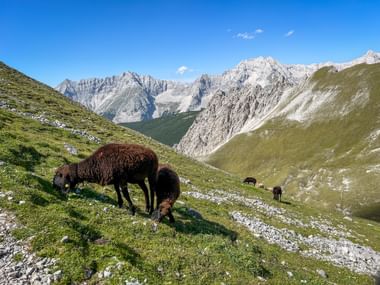
Black and brown sheep grazing on a green alpine meadow with dramatic rocky peaks of the Karwendel mountains in the background under blue sky.

The Perfect Route for Every Set of Conditions

In bad weather, we don't literally leave our Eurohike guests "standing in the rain"; we provide a suitable alternative route. If there is lingering snow in the mountains, or in the case of fog, ice, or thunderstorms, you have absolutely no business being up on those high ridges.

My philosophy: You can hike almost anywhere, but often it’s just not possible to summit high peaks. Weather, natural conditions, or your own physical state aren't always optimal for heading into the high mountains. However, it is often possible to do a more moderate hike or a simpler valley option.

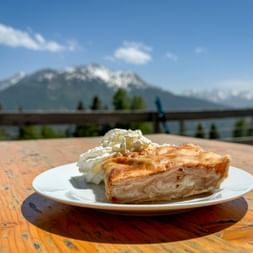
I already mapped out the alternative route via the Solsteinhaus during my last visit to the Karwendel. This option involves less elevation gain, and the paths are easier to navigate, requiring less concentration than the main route. At the highest point, there’s a rustic Alpine Club hut serving delicious Tyrolean cuisine. I remember the cheerful hikers and fun climbing groups who immediately welcomed me into their circle during lunch. I love the simplicity and sense of community in the mountains—the friendly informality and the warm exchanges.The descent leads directly to the train station in Hochzirl, just a few minutes from Innsbruck.

The Lesser-Known Brenner Mountains

To the Blumenberg and into the rustic Gschnitztal valley

From the Inn Valley, the journey continues into the Brenner Mountains, bringing me closer to the main Alpine ridge—the heart of this crossing. The mountains are high and look wild, rugged, and mighty. They radiate a sense of peace and natural power; they may be far less famous than the Grossglockner or the Matterhorn, but they are all the more charming for it. Cable cars are only found in the Stubai Valley for the glacier ski resorts—after that, it gets quiet. Many people only know the Brenner pass from the "highway to Italy," but there is an incredibly diverse, expansive mountain world here with truly idyllic valleys and rustic settlements.

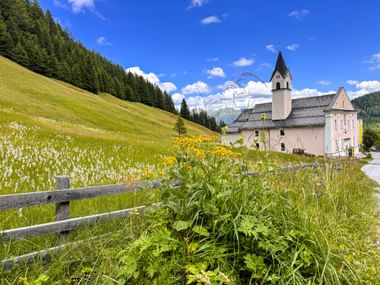
The final—and only—lift assist on this route is the gondola at Mount Serles, which I reach quickly by bus from Innsbruck. I ride comfortably up to the panoramic viewpoint at the start of the pilgrimage trail. I still encounter a few hikers here, but as soon as I move off the classic route, things get quiet. My next destination is the well-known pilgrimage church of Maria Waldrast, a magical place surrounded by countless springs and streams. The pilgrim chapel is an inviting place to pause; the interior feels bright, colorful, and powerful—almost modern—while the large monastery church feels historic and majestic. There’s also an inviting monastery inn, but I still have a long way ahead of me, and the main ascent lies some distance away.

Maria Waldrast church with white tower in Matrei, surrounded by green alpine meadows with wildflowers and forested mountains under blue sky.

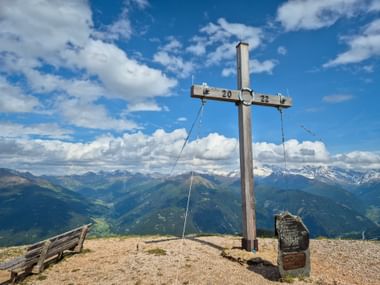
First, I hike to the Ochsenalm for a quick snack before the path steepens. The north-facing cirque below the striking Blaser peak requires some stamina. Switchback by switchback, I climb through gravel fields and mountain meadows. Higher up, the terrain finally levels out. Looking back, I can see the pilgrimage church in the distance where I stood just moments ago. Up here, trees no longer grow—but flowers thrive all the more. The Blaser is known as the "Flower Mountain," and for good reason: a staggering variety of colorful alpine flowers carpets the meadows. A unique mineral composition of the rock and soil creates ideal conditions for this botanical diversity. Once at the top, a cozy mountain hut awaits, serving delicious alpine specialties. After a relaxed break, the nearby summit cross beckons. At around 2,240 meters (7,350 feet), I finally reach the highest point of the day.

Far in the distance lie the Inn Valley with Innsbruck and the Brenner highway. A descent through untouched nature lies ahead as the rustic Gschnitz Valley awaits. Eventually, the small, charming mountaineering village of Trins welcomes me. The crystal-clear Gschnitz stream bubbles through the valley. The hay barns and houses look like something out of a fairy tale, and I feel incredibly at ease in the midst of this magnificent nature.

Wooden summit cross on Blaser peak in Gschnitztal with mountain panorama. Snow-capped peaks visible in the distance under blue sky with clouds.

Designing a tour across the Alps is a deeply fulfilling, interesting, and challenging task for me. I can only recommend that everyone experience the adventure of crossing the Alps for themselves at least once.

Christina Keltenich
Christina Keltenich

Product Management Eurohike

Over the Trunajoch into the Obernberg Valley

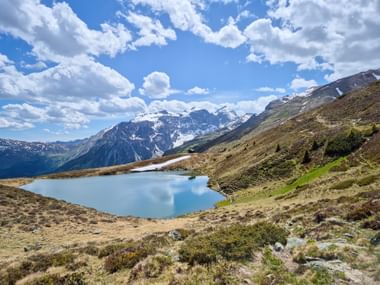
Early in the morning, a 15-minute bus ride takes me to the start of today’s stage. Today’s hike climbs high up to the Trunajoch pass. I follow the trail through meadows and pastures until I reach the start of the steep path along a gorge in the forest. The effort is worth it: the trees thin out, and I enter a wide alpine pasture. The rustic Trunahütte is the perfect spot for a hiking break before continuing up to the pass. Reaching the highest point of the pass is always a special moment, as it’s the first time you can see what lies ahead, which valley you will enter, and what landscapes await. At the Trunajoch, the small Lichtsee immediately catches the eye, and I reach it within a few minutes.

For the descent, there are two options: either the longer, gentler route over the alpine pastures, which leads to the Waldesruh at the end of the Obernberg Valley, or the steeper path through the forest. Exhausted but filled with the impressions of the day, I soon fall into bed after completing the evening data backup of today’s tour (GPS, photos, audio files).

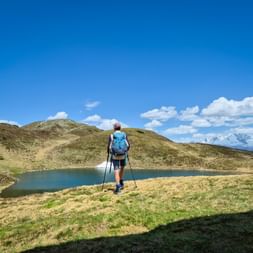
Turquoise mountain lake surrounded by alpine meadows with snow-capped peaks in background under blue sky with white clouds in Gschnitztal-Obernberg.

What if it rains?

In case of bad weather, fog, or a risk of thunderstorms, I strongly advise against hiking over the main Alpine ridge. As an alternative, I decide to test a route from the Serlesbahn down to Trins. Here, the Romedius Pilgrimage Trail offers a great option, winding around the Blaser from the Maria Waldrast monastery. While this is slightly longer than the route over the summit, it is significantly easier and winds around the mountain with a gentle incline all the way to Trins.

This route is truly rewarding and highly recommended if there are still snowfields on the north side. Once in Trins, I explore the extension to Steinach in the Wipp Valley. I follow the Gschnitz Valley Water Trail through meadows and forests until, after a good hour, I pass under the massive Brenner highway bridge and reach Steinach.

Alpine panorama near Mieders showing forested hills and Karwendel mountain range under blue sky with white clouds.

The dream hike of crossing the Alps

Crossing the Alps on foot: this is the dream of many active travelers from all over Europe. No wonder—the Alps offer a variety of landscapes that is hard to find anywhere else. Majestic mountain ranges interact with deep valleys and wild mountain streams to create truly powerful places that never cease to amaze. Would you like to experience these adventures too? Then discover the wide range of offers on our website and let our travel specialists advise you!

What’s Next?

Want to join Christina as she crosses the border ridge into Italy? Then look forward to the second part of this travel story, coming soon to our blog.

In the meantime, feel free to browse through Eurohike's wide range of Alpine crossings.

Book now & secure an early bird bonus!
Until 28.02.2026
Travel search
/en/search

Secure your next active break early and choose between a EUR 20 early booking discount or a Vaude quality backpack worth EUR 110.

Browse through our travel offers now!

Travel search
Secure discount
Hiking around the Zugspitze
You now receive special conditions when you book a trip.